
Overview
The Executive Certificate in Climate Risk Insurance is designed to equip insurance and risk professionals with the knowledge required to understand and manage climate-related risks within modern insurance and financial systems.
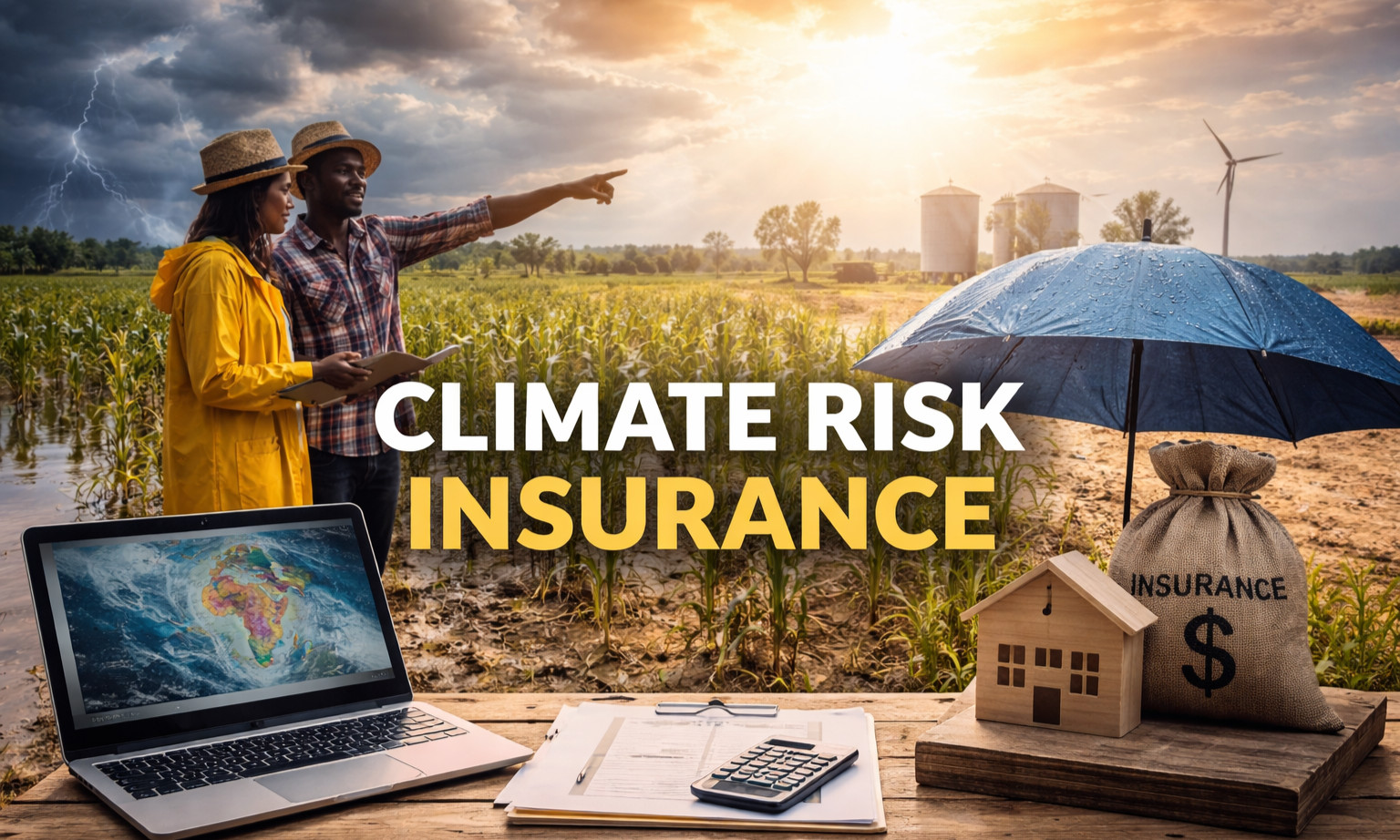
Climate change is increasing the frequency and severity of natural hazards such as floods, droughts, storms, and other extreme weather events. These developments are creating new challenges for insurers, governments, businesses, and communities seeking to manage financial losses and strengthen resilience. Climate risk insurance has therefore emerged as an important mechanism for protecting economies and supporting recovery from climate-related shocks.
This programme provides a structured understanding of climate risk, climate risk assessment, and the role of insurance solutions in managing climate-related exposures. Participants explore how climate risk insurance products are designed, how they support financial protection systems, and how insurers work with governments, development partners, and other stakeholders to strengthen climate resilience.
The programme also examines emerging approaches such as climate risk modelling, disaster risk financing, and innovative insurance mechanisms used to manage climate-related risks across sectors such as agriculture, infrastructure, and disaster response.
Professional Recognition
The Executive Certificate in Climate Risk Insurance forms part of the professional development pathway offered through the IIEA E-Academy™ and is designed to strengthen technical capability in climate risk insurance and climate resilience within the insurance industry.
The programme provides structured training covering climate risk assessment, climate insurance mechanisms, and risk transfer strategies, enabling professionals to develop the knowledge required to manage climate-related risks within insurance and financial systems.
Professionals who complete the programme demonstrate a strong understanding of climate risk insurance principles and the role of insurance in supporting climate resilience and sustainable risk management.
Who Should Enrol
This programme is designed for professionals involved in insurance, risk management, and climate resilience initiatives, including:
- Insurance underwriters and risk managers
- Insurance brokers and intermediaries advising corporate or agricultural clients
- Insurance agents and financial advisers working in climate-sensitive sectors
- Risk and sustainability professionals within organisations
- Government and development sector professionals involved in climate risk programmes
- Professionals seeking to strengthen their expertise in climate risk insurance
- Risk managers and actuaries
- Regulators and policymakers
- Development finance and humanitarian risk leads
- Sovereign disaster risk finance practitioners
- Climate resilience and finance professional
What You Will Learn
Participants will gain practical knowledge and understanding of:
- The nature and impact of climate-related risks on economies and insurance systems
- Principles and mechanisms of climate risk insurance
- Climate risk assessment and exposure analysis
- Insurance solutions used to manage climate-related losses
- The role of climate risk financing and disaster risk financing mechanisms
- How insurance supports climate resilience and sustainable risk management
Learning Pathway
This programme forms part of the IIEA E-Academy Learning Pathway Framework™ for Advanced Insurance Professionals, designed to strengthen technical expertise across emerging areas of insurance practice.
Certification
Participants who successfully complete the programme requirements will receive the Executive Certificate in Climate Risk Insurance.
This programme represents an advanced professional development programme designed to strengthen expertise in climate risk insurance and climate resilience within the insurance industry.
Related Programmes
This programme complements other advanced technical insurance programmes such as:
- Executive Certificate in Risk Management and Insurance
- Executive Certificate in Insurance Underwriting Management
- Executive Certificate in Insurance Claims Management
and helps develop strong capability in managing climate-related risks and designing insurance solutions that support climate resilience.
Download BrochureLearning Outcomes
Upon successful completion of this Executive Certificate, learners will be able to:
- Interpret climate change and disaster risk dynamics and translate climate science, extreme events, and slow-onset risks into actionable insurance, risk-financing, and resilience strategies;
- Design and evaluate climate risk insurance solutions across sovereign, meso, and market levels, applying appropriate product structures including indemnity, parametric, hybrid, and layered approaches;
- Apply Disaster Risk Finance (DRF) frameworks to determine optimal combinations of insurance, reserves, contingent credit, reinsurance, and capital market instruments for different risk layers and client contexts;
- Use climate, weather, hydrological, and exposure data responsibly, assessing data quality, managing uncertainty, and making robust insurance decisions in data-constrained and non-stationary climate environments;
- Interpret catastrophe modelling outputs and climate risk metrics, including AAL, PML, loss exceedance curves, and scenario stress tests, to support underwriting, pricing, and portfolio risk management decisions;
- Price climate risk insurance sustainably under uncertainty, incorporating frequency–severity analysis, volatility, climate trends, capital requirements, and affordability considerations;
- Structure effective reinsurance and alternative risk transfer solutions, engaging reinsurers and capital markets to manage capacity, volatility, and systemic climate risk;
- Design and operationalise climate insurance programmes with sound governance, distribution, payout, and claims mechanisms that ensure transparency, accountability, and timely financial protection;
- Navigate policy, regulatory, and stakeholder environments, engaging governments, regulators, development partners, and communities to build effective public–private partnerships for climate risk insurance;
- Evaluate the impact, ethics, and sustainability of climate insurance programmes, ensuring consumer protection, value for money, resilience outcomes, and long-term trust;
- Integrate technical, financial, and governance considerations to deliver end-to-end climate risk insurance solutions aligned with global best practice and local market realities, and
- Develop and present a comprehensive, real-world climate risk insurance solution, demonstrating applied competence in risk analysis, product design, pricing, data use, financing, governance, and impact through a capstone project.
Course Outline
- 1.1: Learning Outcomes
- 1.2: Forward
- 1.3: Preface
- 2.1: Climate Science Fundamentals Relevant to Insurance
- 2.2: Extreme Weather vs Slow-Onset Climate Change
- 2.3: Key Climate Perils: Droughts, Floods, Cyclones, Heat Stress, Sea-Level Rise
- 2.4: Climate Change Impacts on Key Economic Sectors
- 2.5: Climate Risk Categories: Physical, Transition & Liability Risks
- 2.6: Climate Risk Terminology, Metrics & Communication
- 2.7: From Climate Risk to Insurance Decisions: A Practical Translation Framework
- 2.8: Mapping Climate Risk to Core Insurance Functions
- 3.1: Principles of Disaster Risk Financing
- 3.2: The Disaster Risk Finance Toolkit
- 3.3: Risk Layering and Financial Protection Strategy
- 3.4: Insurance vs Contingency Funds vs Contingent Credit
- 3.5: Role of Governments, Global Partners, and the Private Sector
- 3.6: Sovereign and Meso-Level Risk Transfer
- 3.7: Lessons from Sovereign Risk Pools and Climate Finance Programmes
- 4.1: The Climate and Weather Data Landscape
- 4.2: Weather Station, Satellite, and Modelled Datasets
- 4.3: Hydrological and Climatological Data Systems
- 4.4: Exposure Data Requirements for Insurance
- 4.5: Data Gaps and Sources of Uncertainty
- 4.6: Managing Uncertainty in Insurance Applications
- 4.7: Working with Imperfect Data in Practice
- 5.1: Catastrophe Modelling Architecture
- 5.2: The Hazard Module
- 5.3: The Vulnerability Module
- 5.4: The Financial Module
- 5.5: Key Model Outputs for Insurance Decision-Making
- 5.6: Climate Non-Stationarity and Modelling Challenges
- 5.7: Proxy Modelling and Scenario Stress Testing
- 5.8: Applying Model Outputs to Underwriting and Risk Decisions
- 5.9: Case Applications Across African and Global Contexts
- 6.1: Principles of Parametric Insurance
- 6.2: Trigger Selection and Climate Indices
- 6.3: Payout Curve Engineering
- 6.4: Basis Risk: Sources and Management
- 6.5: Governance, Verification, and Transparency
- 6.6: Community Trust and Payout Governance
- 7.1: Indemnity Climate Insurance Under Modern Risk Stress
- 7.2: Hybrid Climate Insurance Systems
- 7.3: Layered Design Strategies
- 7.4: Matching Solutions to Client Needs and Operational Realities
- 7.5: Application Across Different Market Segments
- 8.1: Core Pricing Frameworks for Climate Insurance
- 8.2: Incorporating Uncertainty, Volatility, and Climate Trends
- 8.3: Capital, Expenses, and Margin Considerations
- 8.4: Price Stability versus Price Volatility
- 8.5: Stress Testing and Scenario Analysis
- 8.6: Balancing Pricing, Affordability, and Sustainability
- 8.7: Role of Subsidies and Blended Finance
- 9.1: The Strategic Role of Reinsurance in Climate Risk Insurance
- 9.2: Role of Global and Regional Reinsurance Companies
- 9.3: Proportional Reinsurance Structures in Climate Risk Portfolios
- 9.4: Non-Proportional Reinsurance: Excess of Loss under Climate Volatility
- 9.5: Risk Layering for Climate Risk Finance
- 9.6: Reinsurer Appetite and Capacity under Climate Change
- 9.7: Capital Markets and Insurance-Linked Securities (ILS)
- 9.8: Traditional Reinsurance vs Capital Markets
- 9.9: Placement, Negotiation, and Partnership Considerations
- 9.10: Professional Judgement in Climate Risk Transfer
- 10.1: Climate Insurance as a Public Resilience Instrument
- 10.2: Sovereign Climate Risk Insurance Programme
- 10.3: Meso-Level Climate Insurance Programmes
- 10.4: Micro Climate Insurance Programmes
- 10.5: Targeting Vulnerable and Priority Populations
- 10.6: Governance and Payout Utilisation Frameworks
- 10.7: Stakeholder Coordination: The Government–NGO–Insurance Nexus
- 10.8: Strategic Integration Across Levels
- 11.1: Climate Insurance Operating Models
- 11.2: Core Components of an Effective Operating Model
- 11.3: Distribution Ecosystems in Climate Insurance
- 11.4: Enrolment, Documentation, and Customer Management
- 11.5: Parametric Claims and Payout Execution
- 11.6: Fraud Prevention and Accountability Controls
- 11.7: Integration Across Programme Levels
- 12.1: Regulatory Maturity and Policy Environments
- 12.2: Public–Private Partnership (PPP) Structuring for Climate Risk Insurance
- 12.3: Alignment with Climate, Finance, and Development Policy
- 12.4: Negotiation Strategies and Stakeholder Communication
- 12.5: Professional Judgement in Policy and Engagement
- 13.1: Evaluating Real Impact in Climate Risk Insurance
- 13.2: Measuring Resilience and Livelihood Impact
- 13.3: Ethical Risks in Climate Risk Insurance
- 13.4: Avoiding Maladaptation and Dependency
- 13.5: Building Trust and Long-Term Sustainability
- 13.6: Integrating Ethics, Impact, and Sustainability
- 14.1: Section 1: Reflection Journal (Modules 2–12)
- 14.2: Section 2: Climate Risk Insurance Strategy Actions
- 14.3: Section 3: Complete Climate Risk Insurance Solution Blueprint